








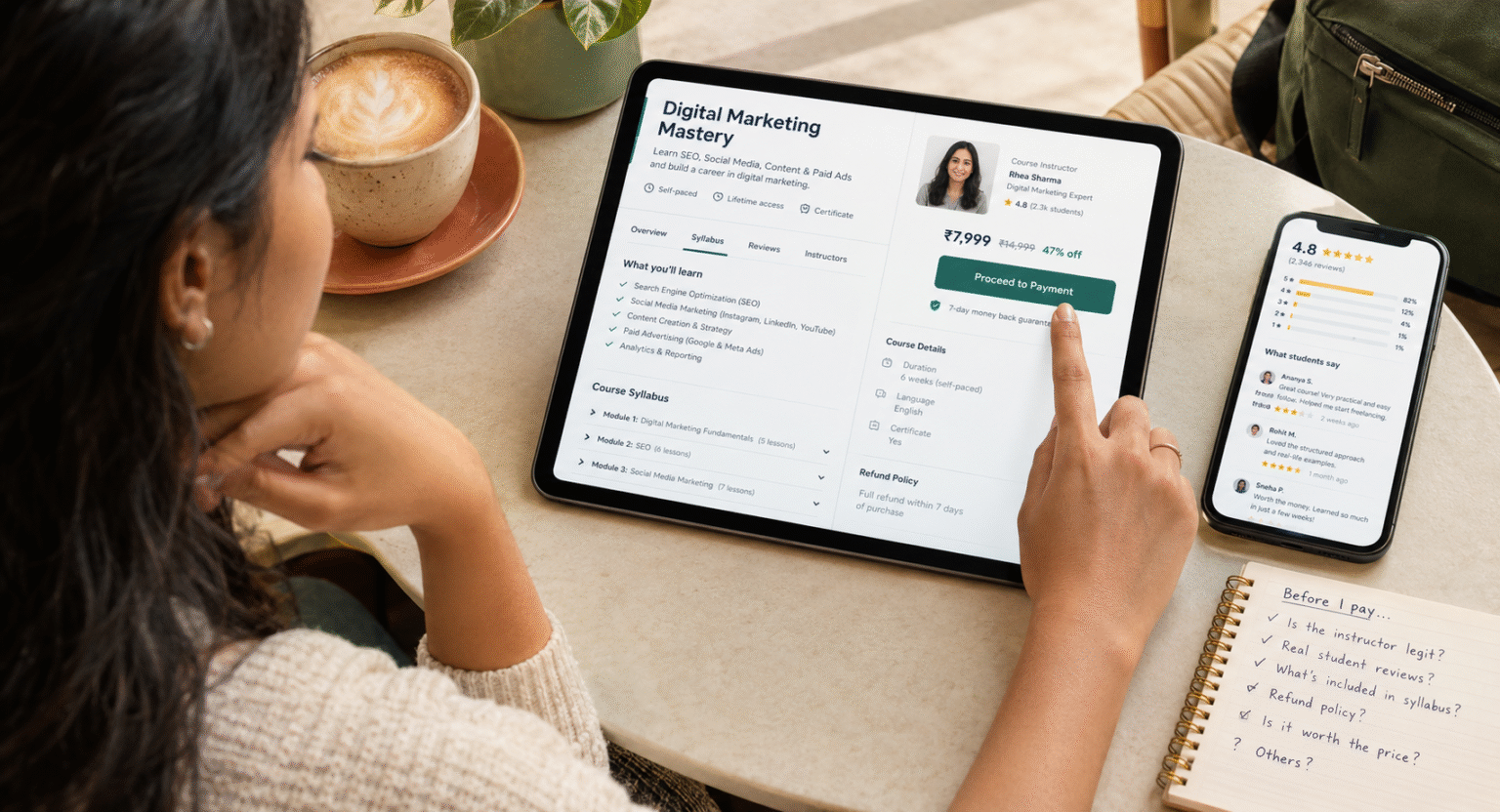
Online courses have made it easier than ever to learn new skills without attending a physical classroom. Whether you want to learn digital marketing, coding, graphic design, finance or communication, you can find courses for almost every career interest.
But with so many platforms, instructors and certificates available, choosing the right course can be confusing. Some courses offer valuable practical training, while others make impressive promises without providing much real learning.
Before spending your money, take time to evaluate what the course actually offers. Here are eight things to check before enrolling.
1. Does the Course Teach a Skill You Actually Need?
Start with your goal, not the course advertisement.
Ask yourself why you want to take the course. Are you trying to qualify for a particular job, improve your existing skills, explore a career or build a portfolio?
For example, if you want to work in digital marketing, you may need practical knowledge of SEO, content strategy, campaign planning and analytics. A course that only explains basic marketing concepts may not meet your needs.
Before enrolling, compare the syllabus with the skills mentioned in job descriptions for the roles you are interested in.
Choose a course because it helps you reach a specific goal, not simply because it is trending.
2. Check the Instructor’s Experience
A professional-looking course page does not automatically mean the instructor is qualified to teach the subject.
Research the instructor’s background, work experience, qualifications and previous teaching content. If they claim industry experience, look for evidence of relevant projects or professional work.
You can also watch free sample lessons to understand how they explain concepts.
Ask yourself:
- Do they explain ideas clearly?
- Do they provide practical examples?
- Is their experience relevant to the subject?
- Can I understand their teaching style?
An instructor does not necessarily need to be famous. Someone who understands the subject and teaches it effectively may offer greater value than a popular creator with limited practical experience.
3. Read the Syllabus Carefully
Before paying, examine what the course includes.
Look for a clear module-wise syllabus, learning objectives, practical exercises, projects and assignments. Check whether the content progresses from basic concepts to more advanced skills.
For example, a graphic design course should ideally include hands-on design work rather than only explaining design principles. A data analytics course may need practical exercises using relevant tools and datasets.
Also check when the course was last updated, particularly if the subject involves changing software, platforms or industry practices.
A long course is not automatically better than a short one. What matters is whether the content is relevant, well-structured and useful.
4. Understand What the Certificate Actually Means
Many online courses provide certificates upon completion. However, not all certificates have the same value.
Some demonstrate that you completed a learning programme, while others are associated with recognised institutions, professional bodies or specific industry credentials.
Before enrolling, check:
- Who issues the certificate?
- Is the institution or qualification recognised where relevant?
- Does the certificate require an assessment?
- Do employers in your target field value it?
- Does it meet any formal eligibility requirements you need?
Do not assume that every paid certificate is professionally recognised.
For many entry-level roles, a strong portfolio, practical skills and demonstrable project work may matter as much as—or more than—a course completion certificate.
5. Check the Total Cost and Refund Policy
The advertised price may not tell you everything.
Check whether the fee includes assignments, projects, instructor feedback, downloadable resources, assessments and the final certificate. Find out whether you need to pay separately for software, examinations or advanced modules.
Also read the refund policy before making payment.
Look for the refund deadline, eligibility conditions, cancellation process and any restrictions. If the course uses a subscription model, check the renewal price and how to cancel future payments.
Compare the course with other options, including free resources, before deciding whether the price is reasonable.
Never pay simply because a discount is about to expire. Take time to evaluate the course first.
6. Look for Reviews and Real Student Outcomes
Testimonials on a course website can be useful, but they should not be your only source of information.
Search for independent reviews, student discussions and examples of work completed by learners. Pay attention to repeated complaints about outdated content, poor audio, missing lessons or unresponsive instructors.
If the course promises career outcomes, investigate what those claims actually mean. A testimonial from someone who got a job after completing a course does not prove that the course alone caused that outcome.
Be cautious of guarantees such as “earn a high salary in 30 days” or “get hired immediately after certification.”
A credible course should explain what it teaches without promising results that depend on many factors beyond the provider’s control.
7. Find Out Whether You Will Get Practical Experience
Watching videos can help you understand a concept, but applying it helps you develop the skill.
Before enrolling, check whether the course includes exercises, assignments, projects, case studies or opportunities to receive feedback.
For example:
- Digital marketing: Create and evaluate a campaign.
- Graphic design: Build a portfolio of original designs.
- Coding: Develop a working application.
- Business analytics: Analyse a dataset and present findings.
- Finance: Practise financial modelling using realistic examples.
These activities can help you demonstrate your abilities when applying for internships or jobs.
If a course contains only recorded lectures and no practical application, consider whether that format suits your learning needs.
8. Check Access, Support and Learning Flexibility
An online course should fit your schedule and provide a reasonable learning experience.
Check how long you can access the lessons, whether the course works on your devices, and whether you can learn at your own pace.
Also investigate the support available if you get stuck. Some courses provide instructor feedback, live sessions, discussion forums or doubt-clearing support, while others offer only recorded videos.
If you are balancing college, work or other responsibilities, make sure the expected workload is realistic.
Finally, check the platform’s privacy practices and payment security before sharing personal or financial information.
Final Thoughts
An online course can be a useful investment when it teaches relevant skills, provides practical experience and supports your learning goals. But paying more does not automatically mean receiving better education.
Before enrolling, examine the syllabus, instructor, certificate, total cost, refund policy, student feedback and practical learning opportunities.
You do not need to purchase every course that catches your attention. Start with a clear goal, compare alternatives and choose a programme that genuinely helps you move forward.
The best online course is not the one with the biggest discount or the most impressive promises. It is the one that helps you learn something useful and apply it in the real world.