




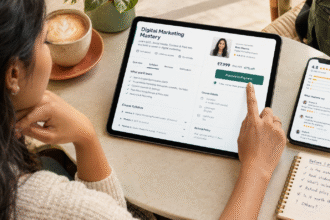




For many students, the expected path after Class 12 is simple: finish school, join college, earn a degree, and then find a job.
But what if you don’t want to go to college right away?
That doesn’t mean you have no career direction. You can explore skill-based courses, professional qualifications, apprenticeships, freelancing, entrepreneurship, or even start working while continuing to learn.
The important thing is not to avoid college just for the sake of avoiding it. Instead, ask yourself:
“What do I want to learn, and what kind of work do I want to move towards?”
Do You Need a College Degree for Every Career?
No.
A degree is important or required for many professions, especially careers that involve regulated qualifications or specific academic pathways.
But there are also career areas where practical skills, experience, certifications, portfolios, and industry knowledge can play a major role.
Fields such as digital marketing, graphic design, video editing, sales, content creation, web development, and some business roles can provide opportunities to build experience without immediately following a traditional college route.
The key is to have a structured alternative plan.
1. Learn a Job-Ready Skill
One option is to spend the next few months developing a skill that can be used professionally.
Depending on your interests, you could explore:
- Digital marketing
- Graphic design
- Video editing
- Web development
- UI/UX design
- Photography
- Content creation
- Sales
- Social media management
- E-commerce
Instead of collecting random certificates, focus on actually becoming capable of doing the work.
Build a Portfolio
For creative and digital careers, a portfolio can demonstrate what you can do.
For example, an aspiring graphic designer could create:
- Brand identities
- Social media designs
- Posters
- Packaging concepts
- Website mockups
The same principle applies to writing, video editing, digital marketing, and other skill-based fields.
2. Take a Short-Term Professional Course
You don’t necessarily have to commit to a three- or four-year degree immediately.
You can explore short-term or vocational programmes that teach practical skills.
Depending on your interests, these could include areas such as:
- Digital marketing
- Animation
- Design
- Hospitality
- Photography
- Web development
- Retail
- Beauty and wellness
- Office administration
- Technical trades
Before enrolling, research the institute carefully. Look at the curriculum, practical training, placement claims, industry recognition, fees, and reviews rather than choosing a course based only on advertising.
3. Consider Professional Qualifications
Some career paths have professional qualifications that follow a different structure from a traditional college degree.
For Commerce students, for example, professional routes can include areas such as:
- Chartered Accountancy
- Company Secretary
- Cost and Management Accounting
These pathways have their own eligibility requirements, examinations, and stages, so research the current requirements before enrolling.
A professional qualification can provide a structured career direction without following the conventional college experience.
4. Start Freelancing
If you already have a useful skill, freelancing can help you gain practical experience.
You could potentially offer services such as:
- Graphic design
- Video editing
- Writing
- Social media management
- Website development
- Photography
- Digital marketing
Start small.
Work on sample projects, build a portfolio, understand how to communicate with clients, and gradually take on paid projects when you’re ready.
Remember
Freelancing is not instant income.
It takes time to develop skills, find clients, manage deadlines, and build a reputation.
5. Explore Apprenticeships and Practical Training
If you prefer learning through actual work rather than only classroom study, apprenticeships and structured training can be worth exploring.
They can provide exposure to:
- Workplace routines
- Professional communication
- Industry tools
- Customer interaction
- Real projects
- Teamwork
This can be particularly useful for students who learn better by doing rather than simply studying theory.
Look for legitimate programmes with clear training structures and conditions.
6. Start Working and Keep Learning
Another option is to take an entry-level job while continuing to develop your skills.
Depending on your background, you might explore roles in:
- Sales
- Customer support
- Retail
- Digital marketing
- Operations
- Hospitality
- Administration
- E-commerce
Your first job doesn’t have to be your final career.
It can help you understand what kind of work environment you enjoy while giving you practical experience.
The important part is to keep learning instead of becoming stuck in a role without developing new skills.
7. Build a Business
If you have an entrepreneurial mindset, you could explore starting something of your own.
This could begin with a small service or online business rather than requiring a large investment.
Examples include:
- Social media services
- Design services
- Online reselling
- Photography
- Content services
- Local business support
- E-commerce
But entrepreneurship should not be treated as an easy alternative to college.
Running a business requires sales, financial management, customer service, marketing, problem-solving, and persistence.
Start small, test your idea, and learn before investing heavily.
8. Take a Structured Gap Year
If you genuinely don’t know what you want to do, taking time to explore can be better than joining a course simply because everyone else is doing it.
But a gap year should have a plan.
You could use the time to:
- Explore different careers
- Take a structured course
- Complete internships
- Build a portfolio
- Prepare for entrance exams
- Volunteer
- Gain work experience
- Talk to professionals
- Test different career interests
A gap year without direction can easily turn into a year of postponing decisions.
What Should You Do Instead of College?
There isn’t one correct alternative.
Your choice should depend on what you want to achieve.
| If You Enjoy… | You Could Explore… |
|---|---|
| Creativity | Design, video, photography |
| Technology | Web development, UI/UX |
| Business | Sales, e-commerce, entrepreneurship |
| Communication | Digital marketing, content, PR |
| Practical work | Vocational training, apprenticeships |
| Finance | Professional qualifications, finance skills |
| Hospitality | Hotel management, travel, events |
These are starting points, not guarantees of employment. Research the actual requirements and opportunities within each field.
Don’t Make These Mistakes
Not going to college doesn’t mean you should stop learning.
Avoid:
- Choosing a random course because it is short
- Collecting certificates without developing skills
- Believing social media promises of “easy money”
- Spending large amounts on unverified programmes
- Assuming freelancing means instant income
- Taking a gap year without a plan
- Refusing college without understanding your chosen career’s requirements
The goal isn’t simply to avoid college.
The goal is to build a career through a path that makes sense for you.
How to Build Your Alternative Career Plan
Before making your decision, answer four questions:
1. What do I want to learn?
Choose a skill or field you genuinely want to explore.
2. How will I learn it?
Identify a credible course, apprenticeship, mentor, training programme, or practical pathway.
3. How will I gain experience?
Build projects, intern, freelance, volunteer, or work.
4. What is the next step after that?
Know how your first skill or qualification can lead towards employment, further training, or another career opportunity.
This turns “I don’t want college” into an actual career plan.
Conclusion
College is one route to building a career, but it isn’t the only route.
If you don’t want to go to college after Class 12, you can explore job-ready skills, professional qualifications, apprenticeships, freelancing, entrepreneurship, vocational training, or structured work experience.
But don’t make the decision simply because you dislike studying.
Make it because you have identified a different way to learn, gain experience, and move towards the career you want.
You don’t need to follow the traditional path. But whichever path you choose, make sure you’re moving forward.